
Rifle Ammo Explained Simply: What to Know Before You Buy
When a distant target must fall with single-shot certainty, rifle ammo delivers the decisive force that handgun rounds simply cannot match. By channeling high-pressure gas behind a precisely seated bullet, it converts stored chemical energy into flat, fast, and lethal ballistics across hundreds of yards. Choose the correct caliber and weight for your barrel’s twist rate, and you turn raw power into practical long-range precision—no guesswork, no second chances, just impact where you aim.
Understanding the Basics of Centerfire vs. Rimfire Cartridges
Understanding the basics of centerfire vs. rimfire cartridges starts with the primer location. In a rimfire cartridge, the priming compound is spun inside the hollow rim; the firing pin crushes this rim to ignite. This design limits pressure, so rimfire rifle ammo like .22 LR is low-powered and cheaper, but the case isn’t reloadable. In contrast, a centerfire cartridge seats a separate primer in the case head’s center, allowing much higher pressures. This makes centerfire rifle ammo—such as .308 or 6.5 Creedmoor—more powerful, accurate, and reloadable. For practical use, never dry-fire a rimfire rifle on the same spot repeatedly, as it can peen the rim and cause misfires. Choose rimfire for plinking and small game; centerfire for hunting, long-range, and defense. Know your firearm’s chamber before buying matching rifle ammo.
How the Primer Location Affects Reliability and Cost
Primer location basically decides how tough your rifle ammo is on your wallet and how often it goes bang. Rimfire rounds, with the primer compound spun inside the rim, are cheap to make but can be finicky—a weak or deformed rim leads to misfires, especially after rough handling. Centerfire primers sit in a sturdy, reinforced pocket, so they’re far more reliable in semi-autos and harsh conditions, but that rugged design costs more per round. For reloaders, centerfire is the clear winner since you can swap cost-effective primers, while rimfire cases are throwaway. Centerfire primer pockets offer superior ignition reliability, but rimfire keeps plinking budgets low. Here’s the quick trade-off:
| Aspect | Rimfire | Centerfire |
|---|---|---|
| Cost per round | Lower (simple crimping) | Higher (precision pocket + primer) |
| Misfire risk | Higher (rim dent issues) | Lower (solid strike surface) |
| Reloading | Not possible | Yes—saves money long-term |
Which Ignition System Is Best for Beginners and Plinking
For beginners and plinking, **rimfire ignition offers the best balance of affordability and simplicity**. Rimfire rounds like .22 LR strike the primer compound inside the rim, making them cheap and incredibly easy to handle, with low recoil that builds confidence. Centerfire primers are more robust for reloading and high-pressure hunting loads, but that’s overkill for casual target practice. Rimfire ammo is also quieter, letting you shoot longer without fatigue. Stick with rimfire for maximum fun per dollar and minimal fuss.

- Low cost per round means more trigger time without budget strain.
- Minimal recoil helps new shooters master sight alignment and trigger control.
- Simple, reliable ignition works in bolt-action and semi-auto rifles designed for plinking.
Decoding the Numbers on a Box of Cartridges

The numbers on a rifle cartridge box are your recipe for performance, not just random digits. The boldest figure, like **.308 Win** or **6.5 Creedmoor**, tells you the exact cartridge dimensions and chamber it fits—mismatch this and you risk a dangerous malfunction. The bullet weight, usually in grains (e.g., 147 gr), dictates trajectory and recoil: heavier grains drop less wind but arc more, while lighter ones shoot flatter. The velocity (fps) right below shows how fast that bullet leaves the barrel, influencing energy and point-blank range. Don’t ignore the pressure rating (PSI or CUP) if listed—it matches your rifle’s action strength.
Always match the caliber number exactly to your barrel stamp, .35 Remington Ammo for Sale then tweak grain and velocity for your target distance.
Finally, a «BC» or ballistic coefficient number, if printed, hints at how well the bullet slices through air—higher BC means better long-range stability.
What .223 Remington, 6.5 Creedmoor, and .308 Winchester Actually Mean
The names on the box—.223 Remington, 6.5 Creedmoor, and .308 Winchester—are not interchangeable labels; they are precise engineering contracts defining the cartridge’s case dimensions and pressure limits. The .223 Remington is a high-velocity, low-recoil varmint and training round, typically firing a 55-grain bullet at roughly 3,000 fps, but it is *not* identical to 5.56 NATO due to chamber pressure differences. The 6.5 Creedmoor was designed for long-range accuracy, using a efficient, high-ballistic-coefficient bullet (often 140-grain) that retains energy and resists wind drift far better than .223. The .308 Winchester is a heavier, full-power short-action round (usually 150–180 grains) delivering substantial energy for medium and large game, but with noticeably more recoil.
- Identify the cartridge’s case length and .32 Win Special Ammo for Sale base diameter, which dictate the rifle’s bolt face and magazine fit.
- Match the bullet weight and velocity to your target distance and game size—.223 for coyotes, 6.5 Creedmoor for 800-yard steel, .308 for elk.
- Always confirm the barrel twist rate; the 6.5 Creedmoor needs a 1:8 twist for heavy long-range bullets, while .223 often uses 1:7 or 1:9.
Understanding Bullet Grain Weight and Its Impact on Recoil
The grain weight stamped on your rifle ammo box isn’t just a number—it’s the physical mass of the bullet, typically measured in grains (7,000 per pound). Heavier bullets, like a 180-grain .30-06 load, pack more momentum but produce **greater felt recoil** due to Newton’s third law; the rifle kicks harder to push that heavier slug forward. Lighter bullets, say 150-grain, accelerate faster, flatten trajectory, and noticeably reduce shoulder strain. When tuning loads, remember that recoil impulse scales with both bullet weight and velocity—a fast light bullet can kick as much as a slow heavy one. Always test a few weights to find your balance between downrange energy and shooting comfort.
Q: Does a heavier bullet always mean more recoil?
Not exactly—recoil also depends on powder charge and muzzle velocity. A light bullet traveling extremely fast can generate sharp, snappy kick, while a heavy bullet at moderate speed may produce a slower, shoving push. Start with factory loads near the middle of the weight range for your cartridge, then adjust based on your rifle’s action and your tolerance for punishment.
Reading Velocity Ratings (FPS) to Match Your Shooting Needs
Velocity ratings, listed in feet per second (FPS), tell you how fast the bullet 6.8 SPC Ammo for Sale leaves the barrel, which directly shapes your trajectory’s arc. Matching FPS to your shooting needs means choosing a hotter load for long-range precision, where a flatter path minimizes holdover errors, versus a slower, heavier round for close-quarters hunting that maximizes energy transfer. A 3,000 FPS cartridge will drop significantly less at 400 yards than a 2,400 FPS load, so check the box’s number against your typical engagement distance. Also, note that higher FPS often translates to more felt recoil, which can hurt rapid follow-up shots. Pick your velocity based on the target size, distance, and whether you prioritize speed or terminal punch.
FPS on the box is your roadmap to trajectory—higher numbers mean flatter shooting at distance, while lower velocities offer heavier impact up close.
Matching Bullet Types to Your Specific Shooting Goal
You’re at the bench, rifle settled, and the target tells you everything—if you’ve matched the bullet to the task. For tight groups at 100 yards, a boat-tail match bullet with a thin jacket cuts wind and prints consistently. But if you’re hunting brush at dusk, a soft-point or bonded core expands reliably on muscle and bone, while a full-metal-jacket would punch through without stopping. Long-range steel? A high-ballistic-coefficient bullet, like a monolithic or heavy match hybrid, keeps velocity and drops predictably past 600 yards. Varmint popping needs explosive 6.5x57R Ammo for Sale frangibles that fragment on impact, not pass through. **The rule is simple: match the bullet’s construction and shape to your intended terminal behavior—accuracy, expansion, or retained energy.** *Q: Why does a hunter and a precision shooter rarely use the same bullet?* A: Because one needs rapid energy transfer on tissue, and the other needs aerodynamic stability and consistent flight. Your barrel cares less than your goal, so choose accordingly.
Full Metal Jacket vs. Soft Point: Penetration and Expansion Explained
When choosing rifle ammo, the trade-off between Full Metal Jacket (FMJ) and Soft Point (SP) hinges on terminal behavior. An FMJ’s solid copper jacket prevents expansion, so it penetrates deeply in a straight line, often exiting a target—ideal for practice or barrier shooting where over-penetration is a secondary concern. A Soft Point exposes its lead tip, which mushrooms upon impact, creating a larger wound channel while sacrificing some depth. This means SP rounds transfer energy faster but may stop short of deep vitals on large game. For hunting or defense, expansion-driven Soft Point performance outweighs raw FMJ penetration; for target shooting, FMJ’s reliable feed and minimal barrel fouling win.
Q: Does a Full Metal Jacket always penetrate deeper than a Soft Point in rifle ammo?
A: Not always—at high velocities, an SP may fragment and lose .32 ACP Ammo for Sale depth, but at moderate rifle speeds, yes, FMJ typically retains more penetration due to zero expansion.
When to Use Hollow Point Rounds for Self-Defense or Varmint Control
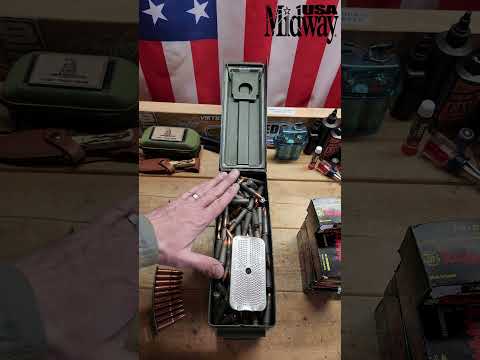
For varmint control and self-defense, hollow point rifle rounds shine when you need immediate, dramatic energy transfer. In a defensive scenario, the bullet’s expansion creates a larger wound channel while reducing over-penetration risk in a home—critical when misses could hit loved ones. For varmints like groundhogs or coyotes, the explosive effect drops them in their tracks, preventing a wounded animal from crawling into a burrow for a slow death. Use them when a clean, quick kill is paramount.
- Choose hollow points for close-to-mid range defensive situations where .338 Lapua Ammo for Sale wall penetration is a concern.
- Opt for polymer-tipped hollow points to prevent clogging when shooting through brush or light cover.
- Rely on 6.5x57mm Mauser Ammo for Sale them for small, tough varmints to ensure instant incapacitation and ethical dispatch.

Choosing Boat-Tail Bullets for Long-Range Accuracy
For long-range accuracy, choosing boat-tail Ammunition for Sale bullets directly reduces drag at transonic and supersonic velocities, preserving downrange energy and tightening vertical dispersion. The tapered base minimizes base drag, which dominates trajectory drift beyond 600 yards, so your ballistic coefficient stays higher than flat-base equivalents. Match this with a twist rate that stabilizes the bullet’s length, not just weight—a 1:8 twist suits 75–80 grain .223 loads. Then, chronograph your muzzle velocity to log precise drop data, since boat-tails are more sensitive to spin-rate inconsistencies at extreme distance.
- Select a bullet with a BC above 0.4 for 6.5mm or .308 calibers.
- Confirm stabilization by shooting 10-round groups at 300 yards; sub-MOA indicates adequate gyroscopic stability.
- Adjust seating depth to 0.020 inches off the lands, as boat-tails respond predictably to consistent jump.
Ultimately, this choice yields flatter trajectories and fewer wind-drift surprises than round-nose or flat-base designs.
How to Select the Right Caliber for Your Rifle’s Action
Selecting the right caliber begins with matching the cartridge to the rifle’s action type, as bolt, lever, and semi-automatic designs impose specific pressure and overall-length limits. For a bolt action, prioritize caliber selection based on case head support and magazine fit, favoring high-pressure rounds like 6.5 Creedmoor. Lever actions require rimmed cartridges such as .30-30 Winchester for reliable extraction. Semi-autos demand calibers that feed smoothly from box or tube magazines, like .223 Remington, and must cycle within the gas system’s operating range. Always verify the chamber specification stamped on the barrel—never use a cartridge that exceeds the action’s structural rating. Measure the action’s internal magazine length before buying ammo to ensure the cartridge’s overall length seats properly, preventing feed failures. Finally, match bullet weight to twist rate, as a 1:8 twist handles heavy projectiles, while slower twists suit lighter loads.

Bolt-Action vs. Semi-Auto: Why the Cartridge Shape Matters
Your rifle’s action dictates far more than cycling speed—it dictates the physical limits of the ammunition you can feed it. Bolt-actions, with their manual, full-length extraction leverage, tolerate sharp shoulder angles and aggressive case tapers, like those on .223 Remington or .308 Winchester, because the operator’s hand supplies the force to seat and extract. Semi-autos, however, rely on gas or recoil to cycle, demanding a cartridge with a gentler shoulder and consistent case body dimensions to ensure flawless feeding and ejection from a magazine. A round that runs perfectly in a bolt gun can jam a self-loader due to its geometry, not its power. Therefore, when choosing a caliber, verify the case’s rim, shoulder, and overall length against your action type. Selecting a cartridge engineered for your specific action type prevents malfunctions and maximizes reliability. For semi-autos, stick to proven, mil-spec-shaped rounds; for bolts, leverage the action’s strength by exploring wildcats or longer, heavier projectiles that would never cycle reliably otherwise.
Common Caliber Pitfalls New Shooters Should Avoid
New shooters often default to the loudest or cheapest option, but choosing a caliber that punishes form breeds flinching. Avoid magnum cartridges like .300 Win Mag for initial practice, as recoil masks sight alignment and builds bad habits. Likewise, don’t select a niche round like .260 Remington based on ballistic charts alone—availability and per-box cost matter when you need trigger time. Another pitfall is ignoring action compatibility, such as forcing a short-action caliber into a long-action rifle, which hurts accuracy and feeds poorly. Also, skip high-recoil oddities like .45-70 for beginners; stick to moderate rounds like .308 or 6.5 Creedmoor that allow consistent shot execution.
Avoid magnum recoil, niche scarcity, action mismatch, and heavy kickers—moderate calibers build skill faster.
Using the Barrel Twist Rate to Pick Optimal Ammunition
Your barrel’s twist rate—the inches of rifling per full rotation—dictates which bullet weights stabilize best. A 1:7 twist handles heavy, long projectiles, while a 1:12 favors lighter, shorter ones. To select optimal ammunition, match the bullet’s length to your twist; too slow a rate yaws the round, causing keyholing, while too fast can over-stabilize and fracture thin jackets. Check your barrel’s stamped rate, then test a ladder of bullet weights—observe group tightness, not just velocity, to find the sweet spot. Twist rate is the hidden compatibility key between action and ammo. Ignore it, and even premium cartridges will scatter like buckshot downrange. Chronograph results alone won’t reveal stability—paper targets 6.5×55 Swedish Ammo for Sale will.
Practical Tips for Storing and Inspecting Your Ammunition
For rifle ammo, storage begins with controlling humidity—keep sealed ammo cans with desiccant packs in a cool, dry space, ideally below 70°F. Avoid loose stacking in drawers where brass can ding; use original trays or reloading boxes to prevent bullet setback. Inspection before every range trip is non-negotiable: check each cartridge for corrosion, cracked necks, or deep scratches on the case. Run a finger over the primer—if it’s proud or recessed, discard it. Always rotate your stock, shooting the oldest rifle ammo first, since propellant degrades even in sealed packages. Reject any round with a wobbly bullet or discolored powder residue. Never oil your ammo; lubricant wicks into primers and kills ignition. Finally, inspect your magazine’s feed lips—damaged ones induce cartridge deformation long before firing.
How to Spot Signs of Corrosion or Damaged Primers

When checking your rifle ammo, give the primer a close look—it’s a telltale spot for trouble. You’re hunting for signs of corrosion on rifle primers, which often appear as a green, white, or fuzzy powdery residue around the primer pocket, or a dull, discolored ring instead of that shiny metallic finish. Damaged primers might show a deep indentation from a firing pin (normal), but look out for cracks, cratering, or a primer that sits noticeably proud of the case head. Also, check for rust-colored streaks running down from the primer, which means moisture got in. Any of these are a hard pass for shooting.
- Watch for green, white, or chalky crust around the primer edge.
- Scan for tiny hairline cracks or a cratered firing-pin strike.
- Verify the primer is seated flush—not sticking out or sunken in.
- Look for reddish-brown stains weeping https://specialtysportsandsupplyltd.com/ from the primer pocket.
Best Practices for Rotating Stock to Maintain Consistent Performance
To maintain consistent performance, adopt a strict **first-in, first-out (FIFO) rotation** system for your rifle ammo. Mark every box with the purchase date and lot number using a permanent marker, then store new acquisitions behind older stock. Monthly, physically shift older rounds to the front of your shelf or magazine, and inspect for corrosion, loose primers, or case cracks before committing them to range use. If you store multiple calibers, dedicate one shelf per cartridge to prevent mix-ups during rotation. Reserve a separate “training” stack for high-volume shooting, pulling from the oldest dated boxes first, so your carry or match ammo remains fresh and ballistically identical.
Why Temperature Extremes Affect Powder Burn and Muzzle Velocity
Heat and cold don’t just affect your comfort—they dictate how your powder ignites. In scorching conditions, propellant burns faster and more violently, spiking chamber pressure and sending muzzle velocity higher than your ballistic data predicts. Conversely, freezing temperatures slow the chemical reaction, producing a sluggish, incomplete burn that drops velocity and often leaves unburnt powder residue in the action. This shift is why your zero can wander by several inches at 300 yards between summer and winter hunts. Always chronograph loads at the actual ambient temperature you’ll shoot in, and store ammo away from direct sunlight or frozen vehicles to keep burn rate consistency within a predictable window.
